REDbreast SHOWDOWN Redbreast 12-Year Redbreast 15-Year Redbreast Lustau Edition Redbreast Tawny Port Cask Edition Redbreast 12 was one of the first few spirits I experienced deeply over twenty years ago. At that time, I would occasionally travel to Dublin for work, and a friend from back home always asked me to bring him a bottle or two of Redbreast 12, which wasn't available in the U.S. then. This gave me a reason to get one for myself too. I remember enjoying it, but not being as enthusiastic as my friend; after a short period, I moved on to exploring other whiskies. But past connections often resurface—and here we are. Redbreast 12-Year Appearance is clear amber (Pantone 143). The aroma has abundant vanilla, along with honey-lemon notes, reminiscent of the Nikka Coffey Malt Whisky I reviewed on 9/21/23, though less intense, plus papaya, hot candied peanuts, a hint of clove, and toast. The taste echoes the hot candied peanuts, or pralines, followed by a subtle spice and light vanilla on the finish. Compared to the other three expressions, the Redbreast 12 seems a bit weak. It's unfortunate that such a classic Irish Whiskey—especially one with a 12-year age statement—is bottled at a low 80 proof. I'd go as far as to call it unacceptable. This isn't a budget-friendly Jameson or Bushmills: it costs $70. Would I purchase it again? I'd like to say yes. R12 is fundamental for an Irish Whiskey collection. However, its value is poor comparatively. It's a pleasant whiskey, and I'll gladly consume and appreciate it. 3.5 out of 5 stars. 40% ABV. 12-year age statement. Redbreast 15-Year Color is deep, strong amber, almost the burnt orange of the Lustau (still Pantone 144). The initial aroma has a sweet, cotton-candy-like note—not overpowering, but intriguing. This note transitions into raspberry chocolate truffles, buttery Irish scones, Concord grape juice, sandalwood, applesauce, caffè latte, orange zest, and Christmas cake. It also has apricot notes, detected after tasting the Tawny Port Edition. The palate has a light body, and the aroma and flavor shift from fruity to more woody and spicy, with a finish of papaya, vanilla, and baking spices. The Redbreast 15 is exceptionally good. Its depth and refinement suggest what the 12-year could achieve with a slightly higher proof. The 15-year can be found for approximately $140. Would I buy it again? Yes. 4.5 out of 5 stars. 46% ABV. 15-year age statement. Redbreast Lustau Edition Color is burnt orange and, like the 15-year, darker than the 12-year, as expected from the sherry cask finish (Pantone 144). The sherry influence is undeniable: notes of dried figs, mulled cider, prunes, clove, molasses, and a touch of vanilla. These characteristics present as more savory on the palate, with a hint of saltiness and a light oiliness. The finish has notes of dates, brown sugar, and some chili spice. The Redbreast Lustau Edition resembles a polished Macallan's country relative; it's slightly less refined but shares family traits (I'll need to conduct a separate comparison to verify this idea). It can be purchased for around $75. Would I buy it again? Definitely. 4.25 out of 5 stars. 46% ABV. NAS. Redbreast Tawny Port Cask Edition (To be clear: The “Tawny Port Cask Edition” here is not cask strength). The color is a similar deep amber Pantone 144. The aroma is not as prominent as the Lustau's, initially presenting a somewhat dusty funk that then develops into the nutty character of tawny port itself, before shifting to brown sugar, French toast with cinnamon, cut grass, chive, and cool spearmint. It has a slightly vegetal quality, with even a green pepper undertone. The mouthfeel is lightly viscous and sharply focused with brown sugar and walnut flavors. The alcohol integration on the palate is less smooth than the Lustau, and the finish reveals some sorghum syrup and a touch of woody tannic bitterness. The Tawny Port Edition, like the other Redbreast expressions, comes in an attractive package. However, this one is a mauve pink, which suggests ruby rather than tawny port. If I were in charge of marketing, I would have chosen a color in the tan range. But I'm getting off track. I sampled each of these over three days, and my impression of the Tawny Port Edition somewhat diminished. This Redbreast expression currently sells for $99. Would I buy it again? Perhaps. 3.75 out of 5 stars. 46% ABV. NAS. Through this comparison, I've been exploring the Redbreast range to become more familiar with the brand (which is part of the Pernod Ricard group). Their website features sophisticated, albeit questionable, branding. There's even a QR code on the 12-year bottle that offers a "virtual experience" allowing you to see the Redbreast robin superimposed on your phone's camera: meaning you can point your phone anywhere, look through it, and the robin appears, along with a separate birdhouse, and prompts to aim the camera in different directions. I couldn't interact with any of it (and I'm technically proficient). So, essentially, you view your phone and see the robin mascot and a birdhouse overlaid on whatever you're pointing your camera at. What's the point? The website includes a "Drinks" section displaying various upscale cocktails. Which advertising genius came up with this? Redbreast's standard offering is the 12-year, priced at $70. Who would use a $70, 12-year-old whiskey in a cocktail? Certainly, some can afford it, and I believe in using high-quality components for artisanal cocktails. But are they seriously suggesting age-stated whiskey as a mixer for premium or super-premium drinks? This isn't everyday whiskey; nor is it vodka (that's a separate discussion). Redbreast's website seems to prioritize age statements (12-, 15-, 21-, and 27-year bottlings), which traditionally appeal to whiskey aficionados. From a business inventory standpoint, producers cannot maintain vast quantities of aged whiskey; as the age increases, the available stock diminishes significantly. Pernod Ricard intends for inventory to sit for 12 years, then be diluted to 40% ABV and recommended for cocktails? From a business perspective: create an NAS offering and market that as your cocktail whiskey. Most cocktail consumers won't distinguish, and Pernod Ricard would profit more by not having all the age-stated whiskies (or at least the 12-year) tied up in inventory before it can be sold. I've worked in finance my entire career, and this business strategy doesn't make sense to me. There's a significant disconnect between the marketing and business operations. I could elaborate further, but I'll stop here. Returning to the whiskey: the undisputed best is the 15-year, followed by the Lustau, the Tawny Port, and the 12-year. I'm confident the 12-year would be considerably better at the 46% ABV shared by the others (Redbreast does offer a cask-strength version of the 12-year—fortunately!—which I haven't encountered yet but would love to try). I appreciate Redbreast's experiments with these different finishing casks, and I'd be happy if the Lustau became a permanent part of their lineup. These are more expensive spirits. The Lustau offers the best value here—and generally among whiskies—and the 15-year is quite good. Note: All spirits were sampled neat in a Glencairn glass.
Redbreast Tawny Port Cask Edition
Whiskey Irish Whiskey Ireland No age statement 46% ABV
Tried it?
How was this pour?
Score this bottleRating a bottle takes an account, so your scores follow you and count towards the number everyone else reads.
About this bottle
Redbreast Tawny Port Cask Edition is the third expression in the brand's Iberian Series. Billy Leighton, Master Blender, and Dave McCabe, Blender, created this limited edition single pot still release. It was first aged in barrels that held ex-bourbon and oloroso sherry. Subsequently, a portion of these whiskies were moved to Tawny Port casks. The whiskeys were then married and underwent a final maturation in newly seasoned Tawny Port hogsheads for 14 to 25 months. It became available in the US in September 2023 with a suggested retail price of $99.99.
How it tastes
Measured across 14 flavor axes. Tap a note to find other bottles that lead with it.
Reviews
Showing the most detailed of 12 parsed reviews.
This whiskey lacks an age statement and is bottled at 46% ABV. After initial aging in bourbon and oloroso sherry barrels, it's finished in seasoned tawny port hogsheads for 14-25 months. This is the 2023 release, retailing for approximately $100-140. It's an acceptable whiskey, but it has some issues not inherent to the spirit itself, which become apparent when compared to other offerings from the brand. First, it's significantly less impressive than the cask strength 27-year-old ruby port. This expression brings to mind that 27-year-old, which I acquired for around $550 a few years ago and now goes for about $700. That's still a decent price for a 27-year-old cask strength bottle from a respected name like Redbreast. If you have the budget for one bottle of the 27-year-old and desire a fantastic port-influenced Irish single pot still whiskey, I suggest opting for that instead of spending the same amount on four bottles of this Tawny Port. If you're going to imbibe, make it the best quality you can afford. Alternatively, if the Ruby Port is out of reach, this Tawny Port might motivate you to earn more to experience a thematically similar, but superior, whiskey. (Just kidding. Spending more on whiskey isn't a great reason to seek more income). Second, Redbreast should really include an age statement. I doubt they'd be dishonest enough to put a spirit younger than 12 years in this bottle and charge nearly double the price of their standard 12-year-old, a fundamental Irish whiskey I strongly endorse. However, this whiskey seems less mature than the 12-year-old. With whiskey, as with people, age doesn't always equate to maturity. My guess is that this is the 12-year-old Redbreast with a finish in seasoned tawny port casks, and somehow these casks resulted in a less mature final product. While the Redbreast 12-year-old offers a smooth and calming experience, this whiskey has an added layer of aggressive oakiness and spice, making it feel like it could be only 10 years old. Since I don't find it as good as the original 12-year-old, the absence of an age statement raises suspicions that it's also cheaper to produce, making this a cynical cash grab. Third, the Redbreast PX Edition (which I'll review next) is a better whiskey in the same price bracket. Redbreast should lean more into sherry influence; it complements the spirit well. To my knowledge, Redbreast has never produced a bad whiskey, always evoking the sensation of a freshly baked cookie with brown sugar, vanilla, cinnamon, walnuts, and butter. However, this recipe is missing the raisins and dark chocolate that the tawny port finish fails to provide. You get an extra burst of orange and wood, but I don't think that enhances the experience. If this Redbreast Tawny Port were my first experience with the brand, I might have considered it a flawed but promising expression and would have been eager to try more Redbreasts. However, having sampled other Redbreasts, I offer these alternative recommendations: - Core range age statements (12, 15, 21 years): All are excellent. The 21-year-old (around $400 now) remains the best Redbreast I've encountered. The 12-year-old can still be found for under $70 and is superb. - 12-year cask strength (around $100): Likely the best value Redbreast if that's your preference. - Redbreast PX Edition (around $150): A superior cask for finishing a Redbreast. - Redbreast Ruby Port 27-year-old (around $700): Similar to this Tawny Port but vastly superior. It's not as good as the 21-year-old, so I'd rather buy another bottle of the 21-year-old if I felt the urge to repurchase this style.
The Redbreast PX was a remarkable introduction to the Iberian Series. Now, we move to the tawny port offering. As I recall, this is the first Irish whiskey I've encountered aged in port casks. Redbreast consistently delivers with these limited releases, making this one particularly exciting. Nose: Notes of blackberry, plum, and raisin. Shortbread cookie. Hints of toffee, malt, and vanilla. Molasses and brown sugar undertones. Hints of macadamia, walnut, and almond. Citrus notes of orange and honeydew. Palate: A strong shortbread cookie presence, followed by blackberry, plum, and raisin flavors. Prominent walnut, almond, and macadamia notes. Flavors of butterscotch, vanilla, toffee, malt, milk chocolate, and caramel. Hints of black licorice. Spices like cinnamon, clove, nutmeg, white pepper, and oak. Citrus notes of orange and tangerine. A pleasing touch of vanilla frosting. Flavors of Gala apple and green grape. Honeydew. Cranberry. Spices of cinnamon, white pepper, clove, nutmeg, and oak. Finish: Flavors of macadamia, walnut, and almond. Blackberry, plum, and raisin. Red grape. Toffee, caramel, vanilla, and milk chocolate. Spices of cinnamon, white pepper, clove, nutmeg, and oak. Moderate duration. I am very fond of this one. The port casks complement the Redbreast profile beautifully. The palate is the standout; the vibrant, dark fruit notes are most noticeable on the tongue. Ultimately, I prefer the PX, but this is a close second. The former is certainly a more complete whiskey with a more captivating profile, but this is a solid addition to the series in its own right. I regret overpaying at $150. My local store seemed to charge a premium, as I've seen it priced as low as $100. Disregarding the fact that I paid too much, it wasn't a purchase I regret, though it's barely worth the price. I adjust my score based on value for money, and this one nearly missed the mark. But it succeeded. And I'm glad I bought it. Eagerly anticipating the next release. As for this one, it deserves a 4.25/5.
This bottle, priced at $200 in my area, recently drew criticism in our group for high-end bottles. However, it's from Redbreast, and I'm consistently pleased with their offerings...or so I thought. The pour is slightly darker than anticipated, and the nose definitely shows signs of aging, lacking the light, airy quality of the standard Redbreast (referring to the 12-year). It remains sweet, with abundant honey, but also features plenty of light, tropical fruits and some port influence. The taste is richer than the standard Redbreast, though not necessarily more complex. While there's evidence of aging, I'm not convinced it improves the drink. The delicate character on the palate is diminished by a syrupy, heavier mouthfeel. Honey and general sweetness are still prominent initially, but it becomes quite full with hints of spice on the finish. The palate feels substantial but not heavy, with traces of dry oak at the end. So, is it a good drink? Yes. But I'd argue the Redbreast 12 is superior, and the Redbreast PX offers significantly more intrigue and depth. To be fair, this is a mild letdown, but perhaps that's due to the local price point ($195-$215), making it not worth the cost.
The nose is rich with dried fruit like raisin, date, black cherry, and fig, alongside nougat, caramel, and the faintest oak. There's very little alcohol vapor. The palate begins with the fig noted in the aroma, complemented by sherry, orange zest, peach, vanilla, hazelnut, and shortbread cookie. The flavors are subtle but exceptionally well-blended. The finish is full of grape jam, barley malt, toasted oak, clove, mint, and a milk chocolate note that emerges last. Absolutely wonderful. The texture is light, airy, and velvety, perfectly matching the flavor profile. I really enjoy the Iberian series from Redbreast. While not inexpensive, the series consistently delivers quality and complexity, and this bottling is no exception. It might not reach the heights of the PX edition, but it surpasses the Kentucky Oak. At the $99 I paid, I have no regrets and would buy it again.
The aroma and initial taste are pleasant, with light dark fruit notes and a slightly buttery character. The finish fades with drier, slightly bitter almond-like flavors. It's certainly a whiskey of two distinct parts. The underlying spirit tastes young. The port influence isn't overpowering, which in this instance wasn't beneficial.
6 more reviews were collected for this bottle. The longest ones are shown first.
Tastes like this
Closest flavor profiles across the whole catalog.
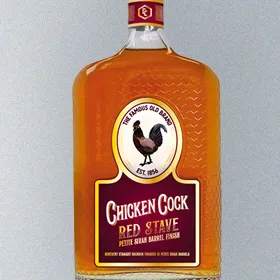
Chicken Cock Red Stave Petite Syrah Barrel Finish (3rd Edition - Tin Release)
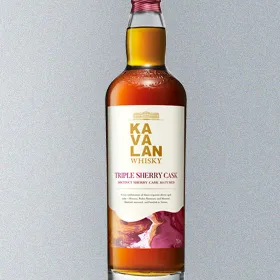
Teeling x Notre Dame 16 Year Single Malt Marsala Cask Finish (Phoenix Legends Series No. 2)