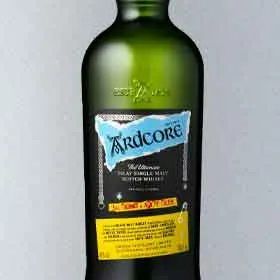
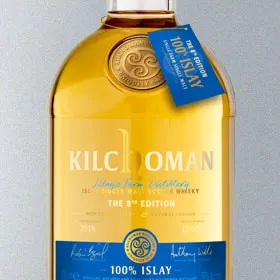
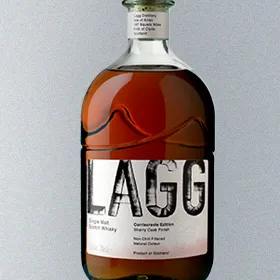
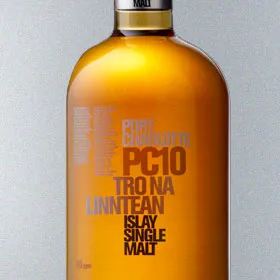
After many reviews, I find it challenging to get excited about a dram enough to write about it. What has captured my attention recently are truly blind tastings using opaque Glencairn glasses. Do they accurately reflect how we should assess a spirit? In my view, not entirely. Presentation, marketing, brand loyalty, and cost can all influence our enjoyment, which seems natural. People don't purchase bottles for exclusive use in blind comparisons. However, completely blind tastings do offer some insight into value comparisons and warrant attention from enthusiasts. If you happen to win one of my blind tastings, I feel compelled to write a review. Congratulations to Octomore 8.1. This emerged as the winner from a blind tasting of heavily peated spirits: #1: Octomore 8.1. Bottled by Bruichladdich. 8 years old. Bottled in 2017. 59.7% ABV #2: Port Charlotte. Bottled by That Boutique-y Whisky Company. 13 years old. Batch 8. Bottled in 2018. 52.7% ABV #3: Laphroaig. Bottled by Cadenhead. 19 years old. 175th Anniversary Edition. Bottled in 2017. 54.0% ABV #4: Ardbeg Supernova. Original bottling. No Age Statement. Bottled in 2019. 53.8% ABV #5: Ardbeg Supernova. Original bottling. No Age Statement. Bottled in 2015. 54.3% ABV #6: Octomore 4.1. Bottled by Bruichladdich. 5 years old. Bottled in 2012. 62.5% ABV Future reviews will adopt a blog format, allowing for discussion of multiple whiskies before highlighting the winner. All whiskies in this lineup were excellent and justify a price point around $200. However, obtaining them at that price may be difficult due to discontinuation or scarcity. Key observations from this blind tasting: OLDER ISN'T ALWAYS SUPERIOR. In my opinion, the prime era for Octomore was releases 5, 6, and 7. I recall being deeply impressed by the 2.1 and 2.2. My expectations were high for the 4.1, which I acquired on the secondary market for $300, but it was surprisingly subtle compared to the others, despite its higher ABV. The 4.1 is clearly inferior to the 8.1 because it lacks the rustic intensity I associate with heavily peated Bruichladdich expressions. ARDBEG SUPERNOVA ISN'T BETTER THAN OCTOMORE. You'll likely spend considerably more on Supernova than Octomore, but if your palate aligns with mine, it's not worth it! I purchased the 2019 at $230 (close to MSRP), but had to pay $400 on the secondary market for the 2015. If tasted without being blindfolded, I'd choose the Octomore 4.1 over these. Unblinded, I preferred the 2015 Supernova to the 2019. Both Supernovas had notes suggesting they weren't quite ready for bottling, which I didn't experience with Octomore. The Ardbegs, however, are much ashier if that's your preference, compared to Octomore. The Cadenhead Laphroaig is an absolute powerhouse of a Laphroaig. It's more intensely Laphroaig than any official bottling I've encountered. Laphroaig as a brand is known for its rawness, but many independent bottlings make the official ones seem tame. The TBWC bottling of Port Charlotte was the most distinctively 'farmy' in the lineup. It raises the question of what PPM truly signifies; if it refers to smokiness (ashiness), most Ardbegs surpass any Bruichladdich product, including Octomore. If it relates to the sensation of consuming chemically treated soil on a farm, many Port Charlotte expressions are far superior to Octomore. This specific Port Charlotte has an aroma like foot odor perfume. Despite being the lowest in ABV, it's the most assertive in the lineup. And now, to praise the victor, Octomore 8.1: This is a whisky that strikes a balance between being bold and noticeable. When not tasted blindfolded, I unequivocally prefer the 8.1 over the 4.1. Regrettably, the only Octomore releases from 5-7 I still possess is an unopened bottle of 6.1, and I can only imagine I would appreciate the 6.1 more. Previously, I rated the 8.1 three stars and generally did not recommend it. I may need to revisit the 8 series and reconsider. Unfortunately, they now command higher prices than most other series on the secondary market due to the 8.3 holding the record for the highest PPM. The 8.1 is intensely earthy and acidic, easily described as moss and volcanic undergrowth. There's a pleasant balance of oaky sweetness on the palate, followed by a powerful ashiness on the finish. Score: * (unforgettably good) Bottle Cost: Approximately $200 retail. Secondary market now around $400-500. My perceived value: $230
Octomore Masterclass 08.1/167
Whiskey Scotch Islay 8 Year 59.3% ABV
Tried it?
How was this pour?
Score this bottleRating a bottle takes an account, so your scores follow you and count towards the number everyone else reads.
About this bottle
Part of the Octomore Eights series, Octomore Masterclass 08.1/167 is an Islay single malt that spent 8 years maturing. It was distilled in 2008 using 100% Scottish barley, peated to 167 parts per million (ppm). The whisky matured entirely in first-fill bourbon barrels and was bottled at 59.3% ABV. Production was limited to 42,000 bottles.
How it tastes
Measured across 14 flavor axes. Tap a note to find other bottles that lead with it.
Reviews
Showing the most detailed of 33 parsed reviews.
After sampling 544 whiskies (not all at once, naturally), I finally tried the "super peated," highly renowned Octomore. While there are numerous Octomore expressions, I managed to obtain a sample of the 08.1. As you may know, Octomore is Bruichladdich distillery's heavily peated whisky, recognized for its organic barley. This expression is called "masterclass" and boasts 167ppm of peat, about five times that of an Ardbeg. It's unchill filtered and uncolored. But, was it any good? Bottled at 59.3% ABV with an amber color. The nose is incredibly perfumed, quite lovely and approachable. The peat is very prominent but perfumed, like cologne-infused foam, not smoky or earthy at all, but perfumed. Clean citrus notes then appear: fresh limes and oranges. After a few minutes, the fresh orange transforms into a more artificial, sugary orange. Following a couple of sips, lemon air freshener and thick caramel notes emerge. On the palate, it's very direct, with only four flavors: lemon, lime, oranges (all very fresh and clean) and pepper. Then.... wow. The aftertaste is far too potent. It feels capable of curing any illness, as no bacteria or virus could survive the sulfuric bath you just subjected your esophagus to. Very earthy, dry, smoky, sulfuric, and minty; this one I'll remember forever. I've had whiskies with higher ABV that don't deliver this black mint, super Listerine, smoky sensation. It's not unpleasant, but not amazing either. Overall, this dram has a very good nose and a not-so-complex palate. The aftertaste is excessively powerful, and I understand the desire to create the world's peatiest dram, but that doesn't automatically make it great. It wasn't what I anticipated; it's not bad, but not particularly enjoyable. My rating is 84 out of 100.
A dram like this always provides a satisfying conclusion to a tasting session, and that's unlikely to change. What has shifted is the perceived value for its price. A recent experience with a particular bottling instantly became a top choice within its line. This expression, with three additional years of maturation, doesn't measure up. This expression is older than previous similar releases, which were younger. Personal tasting history with prior releases shows a consistent profile. This particular bottling seems younger than its stated age. Without dilution, it feels tightly wound and needs time to relax. The flavors are intense and somewhat unusual, bordering on unpleasant, along with significant ash notes. The creamy character found in other releases is absent. Adding water improves it considerably, mellowing the flavors and making them more agreeable. Notes of vinegar, tartness, raw fish, caviar, abundant salt, and a satisfying amount of peat emerge. However, the creamy element remains missing. Future releases in this series are anticipated, maintaining a level of optimism. However, recent experiences have tempered expectations. Score: 0 (unmemorable) Retail Price: $170-200 Perceived Value: $120
The aroma is rich, smoky, meaty, and salty, akin to Lagavulin 16, with hints of fresh orange and peat. The palate is heavy on smoke and peat with prominent mushroom notes. It's not overly harsh, but the iodine lingers persistently. There's a subtle sweetness, somewhat like toffee with walnuts, but it's hard to discern. The peat overpowers the smoke, which isn't my preference. Nice notes of slightly creamy dark chocolate are present, alongside some indistinct herbal notes. The flavor is rich, with little sweetness. A touch of brine and salt is present but not overwhelming. There's a pleasing smoky meatiness reminiscent of chipotles. Adding water reduces the harshness, but intensifies the peat, lending a minty quality. The richness is amplified by more chocolate and creaminess, ultimately tasting much like Laphroaig with hints of herbal bandages. The balance is superior to Laphroaig, with creamy chocolate and other subtle flavors like mineral and mild floral notes emerging, though it remains not exceptional.
OCTOMORE MASTERCLASS 8.1 8YO 59.3% - SAMPLE BOTTLES AGED THREE MONTHS - ROASTED BBQ MEAT, peppery, sweet woodchips, apple woodchips 3.25 - OAKY, apple, malty, and dense creamy dark chocolate, fiery pepper due to the high ABV, 3 - SUSTAINED light to mid smoke, oaky 3 3.25 NOSING. Very sweet aroma, honey, oats, and oak on the first sniff. The second sniff brings a slight burn from the high alcohol intensity and burnt rubber tires. FLAVOR. High ABV, but it lacks the peppery burn found in most other relatively young whiskies. Instead, you experience a soothing warmth that spreads through your mouth – a sensation unlike any other whisky I've encountered. Once the initial warmth subsides, you encounter strong saltiness, brininess, and iodine, along with a smooth, creamy texture. FINISH - Smoky, undoubtedly, but calling it merely peaty wouldn't do it justice. After ten seconds, it's like licking the bottom of a BBQ beef shank pot. Still not convinced? Force a burp, and you'll be surprised by the aroma that erupts from within. Strange, but true.
The marketing for this whiskey emphasizes its extremely high peat content. While this might be factually accurate, it doesn't present as the smokiest spirit I've encountered. For those seeking the sensation of licking an ashtray, I'd suggest exploring standard offerings from Laphroaig, Ardbeg, Longrow, and Balcones Brimstone; they strike my palate as more intensely smoky. Despite this, it remains an exceptionally smoky and excellent spirit. It masterfully blends notes of aged and new wood with smoke, citrus, a whisper of former bourbons, cigar wrappers, and a flavor I can only describe as rice pudding. It's intricate, refined, and possesses a remarkably enduring finish.
27 more reviews were collected for this bottle. The longest ones are shown first.
Tastes like this
Closest flavor profiles across the whole catalog.