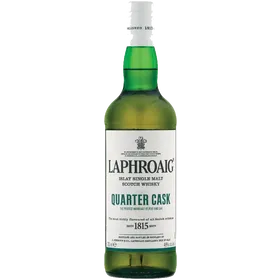
Finding Compass Box at my local state store is difficult, but I can get it when visiting another state. Last Sunday, my partner suggested a spontaneous outing to the boardwalk for food and shopping with the children, but my true pleasure was stopping at a particular liquor store on the way home to buy bottles unavailable locally. This time, I acquired a New Riff Sour Mash Single Malt 7 Year (my local store carries New Riff, but only certain expressions), which I have yet to open, and this Compass Box Glasgow Blend. My prior experience with the brand was the Peat Monster, which I liked but would not repurchase; for its cost, I can find better alternatives like Ardbeg 10 or Laphroaig 10. My spending limit for spirits was nearly reached by the time I got to the store, or I might have also purchased the Compass Box Artist's Blend, which is similarly priced at $34.99, and I now question why I didn't. Given the $34.99 price point, I'm inclined to try any peated offering, and while I'm rating this a 3.25 overall, I can't say it was a disappointment. It's not the most intricate spirit you'll encounter, but the price should have indicated that. Blended scotches can be excellent; just consider Johnnie Walker Green. This particular one, for its cost, has a rather pleasing aroma. It's noted as being finished in Oloroso Sherry Casks, but the sherry sweetness in the scent is minimal. It's predominantly cured meats, bacon fat, and sea salt. I'm uncertain of the constituent components, but its character resembles a mix between Ardbeg and Talisker, leaning more towards Talisker. The aroma is truly the highlight here, so savor it when pouring a measure. The flavor is pleasant, warm, and gentle. Peat is present, alongside vanilla, sea salt, and butterscotch (which I associate with what the label describes as "toffee pudding"), though my reference for butterscotch isn't the hard candy from childhood but the frosting on a specific cake snack. If that sounds appealing, it is, but the mouthfeel is somewhat thin at 86 proof. I've just located the product details while writing this, and the peated components come from Laphroaig and Clynelish, so my initial guess was quite wrong. Oh well, I'll own up to it. Nevertheless, its flavor profile is quite enjoyable. The weak point of this tasting is the finish, which is so brief it's almost nonexistent. But then again, what can be expected from a $34.99 blended scotch? It's respectable for what it is, and if you approach it with that expectation, you won't be let down. Overall, I'm not sure I'd buy this bottle again, but I will enjoy what I have. Given the quality, I'm likely to try the Artist's Blend on my next visit to Ocean City.
Compass Box Glasgow Blend
Whiskey Scotch Scotland No age statement 43% ABV
Tried it?
How was this pour?
Score this bottleRating a bottle takes an account, so your scores follow you and count towards the number everyone else reads.
About this bottle
The Glasgow Blend was developed to evoke a bolder, smokier whisky style, reminiscent of the preference historically held in Glasgow. This blend features a significant malt component, making up 67% of the recipe. Compass Box utilizes a variety of casks for maturation, including first-fill sherry, first and refill ex-bourbon, and a small quantity of new French oak. Previously known as Great King St. Glasgow Blend, the brand's name was updated in 2021.
How it tastes
Measured across 14 flavor axes. Tap a note to find other bottles that lead with it.
Reviews
Showing the most detailed of 50 parsed reviews.
Nose: Smoke, peat, smoky peat, ocean mist. Grilled meat. Salty fruit, if such a thing exists. Red fruit is predominant, with fleeting traces of citrus and perhaps banana. Leather and earth converge, reminiscent of dry tobacco. There might be a nutty almond note, though I'm uncertain. Palate: An immediate onslaught! It feels as though everything arrives simultaneously. Salty and sweet flavors just barely take the lead. The saltiness is like sea spray, with a mild meaty, earthy, smoky undertone. This mingles with sweetness, which is distinctly red fruity, ranging from fresh strawberries to dried cranberries. The overall effect is, again, salted fruit. However, I don't dislike it. Before you can fully process the salted fruit introduction, a rich caramel, chocolate, and hazelnut profile hits the mid-palate. The saltiness persists, infusing all these elements. There's also a subtle baked goods quality. The finish begins concurrently with the mid-palate flavors and blends into the baked goods, introducing warmth and cinnamon. The salt and smoke diminish somewhat, but the chocolate remains prominent deep into the finish, creating a sensation of chocolate-swirled cinnamon rolls with appropriate ethanol heat. This is my second time reviewing this bottle. In the interim, I had COVID and lost my sense of smell temporarily (taste remained, albeit reduced to basic sensations like salty, sweet, bitter). I acquired this and another bottle for a re-review, intending to assess if my smell and taste were fully restored and dependable, without consulting my prior notes. After engaging with this exceptional dram, I believe I have my answer independently. My initial assessment of this bottle noted an overwhelming smoke (likely a high proportion of Lagavulin, or something similarly heavily peated). I also recall my more recent review of the Artist's Blend from the same series. In that review, I commented that the Artist's Blend had a more intricate nose than palate, which was acceptable at times. This Glasgow Blend demonstrates the inverse can also be true. I still perceive the nose as dominated by smoke and somewhat one-dimensional in that regard, even though I detected more nuances this time. The palate, however, is complex, outstanding, and delightful, more than compensating for a less assertive nose. My sole reservation, if it can be called that, is the overwhelming initial impact of the palate. A more gradual introduction of the flavors might allow more to emerge and enhance this dram. Yet, I can hardly voice this criticism seriously for a $40 bottle containing spirits from highly regarded distilleries. This is a superb whisky and offers excellent value.
Nose: Smoky, like roasted pork, with some sulfur and peat. Hints of cherry and other sweet red fruits from sherry, but somewhat restrained. Also hay and earth. It seems to aspire to a Springbank funk but falls short. Faint sea spray notes. Overall, a decent nose with a touch too much sulfur and muddiness, lacking a standout characteristic. Palate: Smoke, earth, and spices like cinnamon, black pepper, ginger, and clove, with some sulfur. Bourbon barrel influence is present with spices leading to vanilla, which then becomes caramel. Sweet red fruitiness from sherry appears next. As these fade, earthy sulfur and hay return, followed by peat. It's smokier than peaty, but both are present. Some sea spray notes emerge at times. Finish: Smoke, peat, vanilla, spices, and occasional faint fruit. A persistent subtle sulfur layer remains. Conclusion: There are many enjoyable aspects, but it's definitely unpolished. The flavors lack refinement and blend together. The persistent sulfur note is a significant issue. Extended aging might have improved this spirit considerably. Comparisons: Lismore 21 initially seemed similar in its sulfur notes, but further tasting revealed sensitivity was key. Side-by-side, Lismore lacks the sulfur I detect here. Still, it's not overpowering. Johnnie Walker Green tastes more cohesive and pleasing, without these issues. Dalmore 15 remains superior but is approaching this in quality. Dewar's 15 The Monarch is cleaner but exhibits more alcohol and a certain blended hollowness. This is superior to Cutty Sark Prohibition, which lacks character and is equally sulfuric. Assessment: It's a 13 or 14. It's drinkable, but the sulfur is a drawback. It holds its own, but I'd opt for Loch Lomond 12 at a similar price, or Johnnie Walker Green and Laphroaig 10 which are not much more expensive. Final Verdict: After careful consideration, a 14. It's too muddled, yet more defined than many unpeated, unsherried blends. This allows for better appreciation of its complexities.
It's that time again. The celebrated period of year when "Best Whiskey of the Year" lists are published. I've observed that these compilations usually feature heavily aged Scotch and limited or allocated Bourbon. While I'm sure those drinks are excellent, most of us will likely never sample them. Therefore, over the next five days, I'm sharing my personal top 5 whiskies from 2020. Most would agree this year wasn't our finest. However, the extended time spent at home led to increased consumption of our preferred brown spirit. The criteria for my selections are as follows: (1) The whiskey must be commonly found on store shelves. No special releases. This excludes highly-rated Wild Turkey Masters Keep expressions I enjoyed this year, although they are definitely worth buying if seen. (2) Each dram on my list costs $80 or less. Everyone should have access to exceptional whiskey. I understand my definition of "exceptional" may differ from others, but that's the enjoyment of our shared hobby. (3) I had to have tasted it in 2020. None of the whiskies were released this year, but this year marked my first time trying them. My number 2 pick is the only Scotch on my list this year, and surprisingly, it's a blend. I'm frequently asked about my "favorite" scotch, distillery, or the "best" value for a good scotch. The answer varies for each question and isn't always constant. Due to the import tariffs in the USA, I reduced my single malt purchases this year, primarily sticking to Glendronach and Ardbeg bottles bought last year and focusing on North American spirits. After a long period of drinking Bourbons, Ryes, and Canadian whiskies, I revisited blended scotch, which the tariffs hadn't affected. Compass Box was an early favorite when I began exploring scotch, and this bottling might be their finest product. Peat? Yes. Sherry? Yes. Malt? Yes. Grain? Yes. This bottle truly represents the "compass" guiding the diverse world of Scotch whisky. If you have a friend wanting to explore scotch, recommend this bottle. Based on their preferences, you can then guide them toward other expressions. Furthermore, it's simply a delicious whisky, which was undoubtedly the objective of its creator. My #2 whiskey of 2020 is the Compass Box Glasgow Blend. Special acknowledgment to someone who brought this to my attention this year. Cheers!
From the 2019 production. A pleasing golden straw color with an orange tint. Medium body. The aroma is dominated by peat, but softened by subtle fruit notes that emerge with patience. A slight grape character with hints of vanilla. Iodine is present but not strong. Notes of chestnut, honeydew, and heather appear. It's noticeable but not overwhelming, nor particularly captivating. Smoke is the initial taste, more like ash than meat. Sweet sherry and malt flavors surface before being suppressed by the phenols. Cantaloupe and honeysuckle notes are present, along with biscuit and cigarette smoke, which tends to linger – a potential drawback. I prefer other types of smoke, like applewood. I had hoped this bottle would be the perfect affordable scotch for highballs, envisioning a balanced yet inexpensive blend where the peat asserted its character and "Scotch" identity, while the sherry and other refined elements made it refreshing for any time. To be clear, my vision might have been unrealistic, and the spirit isn't truly at fault for not meeting those expectations. The peat is too dominant for me to have successfully created an elegant and effervescent cocktail yet. It might perform well in a stirred drink, and certainly, as a neat pour, it's quite good for the price. In the past, when Laphroaig 10 was around $35, I saw little reason to buy this. However, with current pricing making any comparable single malt over $50, this bottle surpasses most peated blends. It's clean, consistent, balanced, and few elements are objectionable besides the lingering cigarette note. You could certainly find worse options.
Nose: Baked apple, raisin, fig, plum, sweet peat, brine, honey, pear, ash, vanilla, molasses, brown sugar, dry herbal notes, nutmeg, orange zest, tobacco, cherry, black pepper, smoked meat, chocolate, deep oak, moderate ethanol burn. Taste: Sweet peat, salt-cured meat, honey, creamy vanilla, baked apple, orange and lemon zest, raisin, plum, pear, black cherry, clove, nutmeg, cinnamon, sweet oak, dark chocolate, black pepper, leather, tobacco, ginger, brown sugar, chocolate chip cookie, moderate alcohol bite, finishing medium long with sweet peat, dark fruit, black pepper, and salted smoked meat flavors. This is exceptionally well blended. The smoky, meaty, and briny characteristics are nicely balanced with sherry-influenced fruit, baking spices, and chocolate notes. The youthfulness is present but not overly bright or harsh. Interestingly, I experience a numbing sensation in my mouth after the finish subsides. I'm uncertain if it's personal to me today or if something in the blend contributes to it. It's not unpleasant, but it's noteworthy. This isn't outstanding, but I appreciate it more than its counterpart. There's a slight bitterness in the finish, but I don't find it as objectionable as with the other expression. I wouldn't keep this on hand for sipping, but I would happily drink it if offered. For the price, it's a solid choice.
44 more reviews were collected for this bottle. The longest ones are shown first.
Tastes like this
Closest flavor profiles across the whole catalog.