Rating: 19/23 No clue what to expect here. Nose: There's a minty spice with anise, alongside some richer, more savory herbs, earth, straw, wood, and a touch of citrus. It smells good, possessing an intriguing, ever-changing character. However, it definitely smells like something some people won't enjoy and it smells quite situational. Palate: The palate has great vibrancy yet doesn't taste exceptionally rich. There's a bit of prickliness and herbaceousness that remind me somewhat of a high-rye rye like WhistlePig. The specific herbal profile is reminiscent of Jagermeister, but with more distinct flavors, less sugary viscosity, and none of that metallic cola taste. There's a hint of that Jagermeister Cold Brew spiciness here, but not the roastiness. The complexity here is genuinely surprising and enjoyable, particularly since the flavors harmonize so well. It masks its alcohol quite effectively too. I assumed it was probably 30 to 40 percent alcohol, but I checked the back and it's 55! The actual flavors include a significant kick of black, white, and even rainbow peppercorns, balanced against a viscous sweetness with an herbal foundation. The mint, anise, and citrus come through, though not nearly as much as the pepper. There's some kind of bitter herb flavor lingering in the background that I'm struggling to identify, but I definitely detect some piney rosemary and perhaps a little thyme as well. Unfortunately, there's a slight off-note with the alcohol flavor that prevents me from loving this. Finish: The pepperiness and light herbaceousness persist while the alcohol and viscous sweetness fade. It's a light, fresh finish that lingers for a while and is pleasant to contemplate, while also being more balanced than the palate (though less complex). This strikes me as the herbal counterpart to St. Germain – it's elegant and very complex, targeting a specific flavor category (namely floral/fruity and spicy/herbal as opposed to being limited to chocolate or a smattering of fruits and spices and nuts and caramel and...). It also doesn't reveal much alcohol. This isn't just something I could drink; it's something I'd be happy to drink. It's a shame it's so expensive, but not much is needed at once, so I think this bottle will last me a while. I'm not sure I have any reason to restock Jagermeister when I run out now that I have Chartreuse Green (not that I really did anything with Jagermeister to begin with), even though they aren't perfect substitutes. I'm looking forward to trying this in various cocktails and perhaps just enjoying a small pour occasionally. I need to actually rate this though. I started with a 16, which I probably should have posted as a separate tasting, but I was too lazy. That seems low now though. This strikes me as superior to any of the orange liqueurs I've tried as a sipper (though less likely to achieve universal appeal), and I'm not really sure what to put it in (I mean, I only know of about 2 cocktails). That said, it doesn't seem at all bad mixed with some gin or tequila, but it needs to be moderated, so it won't be the primary flavor there. The flavors here do get muddled fairly quickly, whereas they hold up better in St. Germain when it is mixed and with a palate that is not in perfect condition. Considering that, I think St. Germain is the better of the two. Its flavor also holds up well in a drink, and both are best suited for refreshing drinks with comparatively low ABVs where the spirit's complexity is more prominent, so I don't think that the St. Germain's lower ABV significantly detracts from its relative value for the money. A couple of things I tried that should serve as good benchmarks for cocktails are this with vodka and this with gin. The particular vodka (Beluga Noble) is a bit milky/oaty sweet with a harshness to it. It worked well, taming this somewhat, while adding a new element. The inexpensive gin (Dover Strait) also gave the Chartreuse an interesting new character with its stark juniper flavor and clean presence. I wouldn't say that either was necessarily superior to plain Chartreuse Green, but they at least helped to extend the bottle and show promise for actual cocktails featuring Chartreuse. I've even tried mixing it with bourbon and found that the result was about as good as the neat Chartreuse and possibly better. It's like sugar plus slightly bitter herbal components, so that makes sense. I think with a bit more effort I'll discover something that truly clicks here, but, regardless, Chartreuse has significant potential in cocktails. I think that Chartreuse tastes at least as good as Grand Marnier does neat (and really I think it's better). I can therefore sort of imagine scoring it as low as a 17, but I really think 18 is more the minimum. I don't see it going as high as 21 though, so 18 to 20 is the most realistic range, and either 19 or 20 truly does seem appropriate. 19 it is for now, but I can definitely envision this moving up to a 20 in the future. Here's where I'm going to do something quite unusual. I have not found that exceptional cocktail that definitively elevates this to a 20 yet, but because I have found so many that are as good as this is neat, I'm going to make an assertion: because Chartreuse Green neat is on the borderline between 19 and 20, at least one of those cocktails is most likely good enough to bump it into the 20 range, and if none is good enough, I'm sure that one exists and isn't incredibly difficult to find. Consider this a temporary loan, Chartreuse. I may revoke it and lower you back to a 19 at any moment.
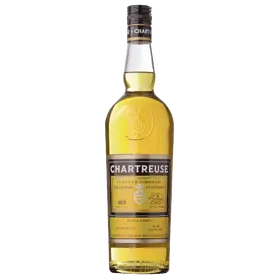
Chartreuse Green Liqueur
Liqueur Herbal Liqueur France No age statement 55% ABV
Tried it?
How was this pour?
Score this bottleRating a bottle takes an account, so your scores follow you and count towards the number everyone else reads.
About this bottle
Green Chartreuse, first produced in 1737 by Carthusian monks, is based on an elixir recipe from 1605. It is composed of 130 plants and herbs, which are processed through maceration and distillation according to a method known entirely by two monks in France today. The vibrant green color is naturally occurring. Bottled at 55% ABV, it is a more robust and spicy option compared to its Yellow counterpart and is a key component in a Last Word cocktail.
How it tastes
Measured across 14 flavor axes. Tap a note to find other bottles that lead with it.
Reviews
Showing the most detailed of 51 parsed reviews.
I've been aware of this liqueur and its yellow counterpart for some time, but recently, more and more cocktail recipes have started to call for it. I knew about the high price, but not the high alcohol content, which, combined with my interest in these new cocktails, led to the purchase. Despite my initial reservations, I want to sample a few ounces of this straight, as I do with all my other liqueurs. Given its complexity and the highest ingredient count of any beverage I've encountered, this is an exceptional starting point. Naturally, the nose offers a lot, but my immediate impressions, without conscious thought, include notes of cleaning products, anise (specifically the ground spice, not licorice), dried citrus rinds, juniper berries, and numerous other subtle spices and botanicals that meld together too much for me to identify. There's a slight ethanol presence, but not enough for me to anticipate the moderate 110 proof. The initial taste is purely spices, as if the entire spice aisle of a health food store was combined. Even when the liquid is still, the spices permeate the mouth, creating both an oily and dry texture. The anise flavor begins to emerge subtly here, but it's only truly noticeable after swallowing. The flavors in the mouth and throat now diverge, allowing the spicier notes to come through in the throat, while the mouth receives more of the raw, baking spices. When air is introduced, it becomes as dry as if I were consuming sand. Fresh notes of very dry citrus and some juniper help shape the finish. Cheers to anyone enjoying this neat right now, because it's a bit too concentrated for me to appreciate that way. The potential for enhancing and experimenting with different flavors in cocktails is certainly limitless, particularly since some spirits would accentuate this liqueur's notes in ways others wouldn't. Calling this unique is obvious, but I do appreciate the history and mystery surrounding its creation. I wouldn't say this is a necessary liqueur for every home bar, but it is certainly available and recommended for those eager to discover the next best mixed combination.
I read the review from and felt compelled to experience it myself. The distinctive color, the mystery surrounding the ingredients, and the unique nature of the spirit all seem to perfectly symbolize the start of a new year. I sampled it over multiple occasions across several days, trying my best to uncover, reveal, and understand it. A pale green, artificial-looking hue, similar to the color of a sour apple Jolly Rancher. If one were to judge an aroma by its appearance, you would likely guess the scents correctly. It's earthy and minty. Freshly mowed lawn clippings and spearmint, basil, oregano, pine needles, fennel, thyme, and oranges with cloves all stimulate the nose. Cinnamon and nutmeg add a touch of earthy spice. This is unlike any other combined aroma I've encountered before. It's antiseptic yet captivating. The palate is equally unique. It presents as viscous, oily, and dense. The spiciness of white pepper coats the tongue from the slick liquid. From there, it transitions to a delicate sweetness with herbaceous notes. Imagine a simple white sugar syrup blended with thyme, basil or pesto, fennel, spearmint, rosemary, pickled ginger, and cinnamon. There are other flavors present that I cannot fully discern. The complexity of the flavors is far beyond what the palate can isolate and identify. What can be detected feels like only a fraction of what's actually there, like an iceberg – much more lies beneath the surface. The palate remains oily and tingly with the white pepper, syrup, spearmint, and pesto sauce. Fortunately, this sensation persists for an essential eternity, and it's rewarding. I'm not sure what else to add. This is unique, refreshing, satisfying, cleansing, aromatic, and tasty. I haven't used so many adjectives to describe a single spirit I've tasted. It serves as a perfect complement as a digestif, but is equally enjoyable for simple pleasure. It's worth the price. [$56][96/100][Tasted: 12/21/22]
Appearance: Chartreuse. A pale yellow-green hue of crystal clarity that refracts light like a green diamond or peridot. It resembles the color of high-grade un-louched absinthe. Aroma: Lime juice, lime marmalade, pine needles, basil, oregano, angelica, spearmint, peppermint, a hint of green anise, thyme, juniper, dried orange peel, orange sherbet, cinnamon, menthol, wintergreen, lemon balm, grapefruit, a suggestion of eucalyptus, liquidambar resin, and countless other herbal and spice scents (literally). The complexity of this aroma is supernatural. Flavor and Texture: A very sweet and complex herbal start that evolves into an intricate mid-palate built on mint, citrus, pine oil, rosemary, sorrel, basil, green anise, fennel, petite wormwood, and an array of seed spices too complex to discern. The finish is long, with emerging ginger and red ginseng, and there's a note of gentian bitterness in the aftertaste. The texture is dense and syrupy. This is a liqueur of unparalleled complexity and nobility. In the spectrum of liqueurs, just as in the visible light spectrum, Chartreuse stands brilliantly and aloof at the center, with everything else flanking it. I prefer to drink it neat, at room temperature, accompanied by a demitasse of strong, unsweetened black coffee. "Patrician": 96/100 (5 stars)
Review #30 - Liqueur #5 The 350ml bottle has been open for ages, with well over half the liqueur remaining. It hasn't been opened in recent years and was stored properly, so there's no significant oxidation. Appearance - oily, very viscous...and a very vibrant green! Nose - quite a bit of alcohol (55% is extreme for a liqueur), spicy, peppery, a very strong pine scent, coniferous tree resin, mint. Palate - incredibly viscous and oily, unbelievably so. A very intense, bright, herbal flavor, initially very sweet, then very spicy. Finish - mild, but very long, effervescent, minty, with more of the pine and tree resin, but also some anise. It goes down smoothly, with the intensity only on the palate, accompanied by spices. To be frank, it's not something you could drink daily, or reach for very often, but it's so oily, with an excellent mouthfeel, complex yet bright, with such distinctive notes and aromas...if anyone is seeking something very similar and perhaps more accessible, especially in Nordic countries, there's Løitens Aquvit Likør...it's unbelievably close in flavor profile to green Chartreuse.
Smell: fennel, licorice, ethanol (55% Alcohol will account for that), menthol, anise, clove Neat: white sugar (like dissolving), anise, fennel, licorice, mint/menthol, vanilla?, heat (higher proof), wormwood (leaves mouth dry like absinthe), cinnamon, On Ice: vanilla, white sugar, menthol, clove, anise, fennel, licorice, cinnamon, Verdict: Share it, this is a delicious herbal liqueur unlike anything I've encountered. I jokingly say that Absinthe wishes it tasted and looked like Green Chartreuse. For those interested in exploring Absinthe, I wholeheartedly recommend getting and trying this liqueur to see if you might enjoy the flavor profiles, though I caution that absinthe won't be nearly as sweet as Green Chartreuse. I've made fantastic drinks with this bottle, and I highly recommend getting it and sharing it with friends to see if they notice any flavors you missed, as there are at least 130 different ingredients/botanicals in this bottle.
45 more reviews were collected for this bottle. The longest ones are shown first.
Tastes like this
Closest flavor profiles across the whole catalog.