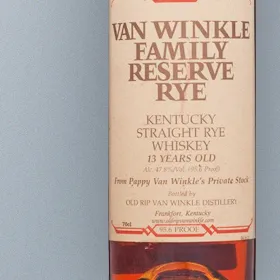
I appreciate bourbon, writing, and the Oxford comma. I've also grown to appreciate rum, mezcal, gin, spirits ending in “gnac,” Chartreuse, and so on. In short, standing out is occasionally preferable to blending in. Friends who are unapologetically themselves are not unlike fine spirits. If these points haven't deterred you, allow me to share a story. A companion is departing soon. He is unconventional and tends to unsettle those unaccustomed to introspection. An accomplished educator, a physician, and a gay man from Kentucky—he generously assisted a friend with a move, compensated with the local currency. While clearing out a cabinet, he discovered a partially consumed bottle capped with gold wax, missing its cork. A wine stopper had preserved about two-thirds of the contents. He was informed the bottle represented an expensive misstep. It had been opened and shared amongst companions, to general dissatisfaction. The remainder became his, eventually accompanying him through medical school. To commemorate this, he brought it to share with me. Meanwhile, I've been expending considerable time and resources searching for whiskey. Consequently, I acquired a bottle from the secondary market some years ago—paying approximately $125 for a Weller 12 year with a screw cap. An $18 bottle of green-label Weller, also with a screw cap, had been relegated to the back of the cabinet but was eventually retrieved. Subsequently, a bottle of Pappy Van Winkle 15 year (obtained via a lottery above suggested retail price) was also brought out. We compared these four side-by-side, and the variation in color was striking. The two younger ones displayed a pale golden hue, the 15-year a pleasing amber, and the 23-year a cherrywood red. We discussed life, the experience of being wronged by an impersonal system yet finding both contentment and success. We spoke of seizing opportunities as they arise, rather than years later. There was more, but I'll omit the details. As we sampled, we observed the following: Weller - thin consistency, notes of corn syrup, bananas, green cigar leaf, nutmeg, and pepper. Weller 12 - richer caramel, subtle oak, a more complex and engaging spice profile, yet remarkably approachable. Pappy 15 - a profile that might evoke strong emotions; a deeper, more intense sweetness with notes of toffee, dark cigar wrapper, cherry, a touch of pepper, allspice, and cinnamon, complemented by prominent notes of varnish and a whisper of bitter walnut. Pappy 23 - the aroma is opulent and dense, weighted with notes of scorched, resinous sugar, hints of seasoned cast-iron, ripe red raspberry (surprisingly), Werther's Original butterscotch candies, and aged furniture. However—the palate is thick, almost syrupy (as expected), and immediately exhibits floral qualities bordering on perfume or shaving cream. The sweetness is nearly overwhelming, with traces of burnt cornbread and toffee, delayed varnish undertones, and a persistent oily mouthfeel. The finish is exceptionally long, with lingering floral notes, grape seed oil, wood, and a subtle tarry sweetness. We concurred that the 23 was unlike any previous experience. It lacked the pronounced oak of the 15 but was an entirely different entity. Interestingly, revisiting each pour revealed discernible floral notes in all of them. The green label evoked a sense of casual elegance—like khakis, a blazer, and Old Spice—simple yet enduring. The 12 suggested a more relaxed suit and a common department store fragrance. The 15 was akin to a full tuxedo with the undiluted extravagance of a grand party. The 23 presented as incense, ceremonial robes, and regal presence. We then agreed the 15 was our preferred choice. Experiencing the 23 felt somewhat beyond our current preferences. We favored the sophistication of tuxedos and spirits. The following day, I conducted some research. The bottle, marked "Bottled by Old Rip Van Winkle Distillery"—Lawrenceburg, KY, with a clear glass and gold wax top—was likely bottled in 1999 or 2000. This would represent the final batch distilled in bulk at Stitzel-Weller, acquired by the Van Winkles, and bottled at the Hoffman distillery in Lawrenceburg (before the merger with Buffalo Trace). It seems bottles from '98 and earlier would have been green glass (and used a mash bill with some rye), while those after 2001 would be labeled as bottled in Frankfort. Therefore, the 99/00 bottling would have been distilled around 1976-77. How did it taste initially, roughly 20 years ago when first opened? Unknown. Reportedly, it was so unsatisfactory that it was sealed and hidden away. This leads to the moral of the narrative. Pappy Van Winkle bourbons often end up with: 1) fortunate lottery winners, 2) lucky individuals who are kind to others, 3) those who camp outside liquor stores, and 4) people with more wealth than judgment. Would I spend $300-400 on a bottle of Pappy 23? Yes. It's remarkably unique and tastes like something that likely resided in a dresser for over two decades. Would I reach for it regularly? Absolutely not. But it does contribute to a memorable anecdote. The contents will soon be depleted, and like my companion, it will be missed. If destiny allows, we may repeat the experience someday. Otherwise, we will navigate this world, hopefully giving ourselves fully to those in need, and our stories will be recounted for years, continuing the cycle. Cheers.
Pappy Van Winkle 23 Year
Whiskey Bourbon Kentucky 23 Year 47.8% ABV
Tried it?
How was this pour?
Score this bottleRating a bottle takes an account, so your scores follow you and count towards the number everyone else reads.
About this bottle
Considered the most mature Pappy Van Winkle, this wheated bourbon matures for 23 years in new, charred American oak. Barrels are meticulously chosen from the best in the warehouse and bottled at 95.6 proof.
How it tastes
Measured across 14 flavor axes. Tap a note to find other bottles that lead with it.
Reviews
Showing the most detailed of 50 parsed reviews.
On January 27th, 2022, I had the chance to try 3 distinct pours from recently opened bottles, all 2021 releases: a 15 Year, a 20 Year, and a 23 Year. I meticulously examined the aroma, taste, and repeated the process multiple times, taking sips of water between each tasting. No water was added to the spirit itself. While personal preference varies, I find wheated bourbons too mild for my taste, and Pappy, in general, doesn't quite meet my expectations, particularly given the current secondary market prices. For the cost per pour, it was a delightful and uncommon indulgence. These are excellent bottles to own at retail, but I'd skip them at the secondary price. At this hotel bar, it was a worthwhile experience, costing less than the secondary market but more than retail, which is typical for premium spirits at upscale venues. The freshness of the pours was a definite bonus. The final sip was over an hour after the initial pour, allowing ample time for the aromas and flavors to develop. Pappy 15: Cost $65/oz, Secondary ~$2800 ($110/oz). Pappy 20: Cost $100/oz, Secondary ~$3850 ($150/oz). Pappy 23: Cost $125/oz, Secondary ~$4700 ($185/oz). In my younger days, Johnny Walker Blue was an impressive selection for home or special occasions. Much has changed since then. Pappy, BTAC, Michter's 25, Michter's 20, OFC, Abraham Bowman Cask Strength, and numerous others now hold the top positions for a truly exceptional dram. My assessment: The 15 Year was outstanding, from aroma to finish. It was the most balanced of the three. The aroma offered sweetness, fruit, and just the right touch of oak. The taste presented a classic bourbon profile – flavorful and well-rounded, though not overly intricate. The finish mirrored this balance, delivering a pleasant taste from start to finish. Score: 4.50/5 (would deduct 0.25 if not a Pappy, making it 4.25). Pappy 20 Year: I recall enjoying a 2019 release of the 20 Year a bit more. The extra five years significantly increased the oak presence in both aroma and taste. The aroma combined oak with traditional caramel, vanilla, and rich chocolate notes. The taste offered more richness and oak. The finish was consistent, mirroring the nose and palate from beginning to end. Score: 4.25/5 (the 2019 release would be 4.5, making this 4.00; 2019 was 4.25). Pappy 23 Year: An additional eight years further amplified the oak from nose to palate, quite similar to the 20 Year. The aroma featured oak alongside rich caramel, vanilla, and chocolate – even richer than the 20, but not dramatically so. The taste added more richness, oak, and complexity. The finish was consistently satisfying from nose to end. Score: 4.25/5 (would deduct 0.25 if not a Pappy, making it 4.00). My scoring explanation: Experiencing Pappy is a special occasion, so I mentally added 0.25 points to each score. However, the actual cost warrants a deduction of 0.25 points. If I could acquire any of these bottles at double the retail price, I would gladly add them all to my collection. At triple retail, I'd have to consider it more carefully – though the 15 Year would be a definite yes. The 20 and 23 Year are impressive, but again, this is subjective; they are remarkable pours that don't quite reach the level of my absolute favorites. At 15-18 times the current retail price, I would never purchase them – a hard pass. Pappy has become a symbol of prestige that has priced itself out of sensible secondary market acquisitions, serving more as a status symbol. Honestly, all three were impressive, but as a special pour, I recommend indulging. We work hard and deserve the best, but I cannot endorse buying a bottle at $4700.
Pours a nice shade in the copper amber spectrum, with minimal legs, but visually appealing. The aroma is intensely of oak, vanilla, oak, caramel, oak, dusty spice, and in case I haven't emphasized it enough, lots of oak. As the aroma might suggest, the taste prominently features that oak, but traditional caramel and vanilla notes are present in good measure, along with a dusting of spice (I know this is a wheater, but I associate this kind of spice with rye – perhaps I'm just a fraud and bad at describing bourbon) and an almost bitter oak note (I'm sure whiskey connoisseurs view bitterness negatively, but as a beer enthusiast who came up during the West Coast IPA era of breweries pushing the limits of bitterness, the connotation here isn't negative). The mouthfeel is medium-bodied and, for lack of a better term, it's somewhat dry. Overall, it's delicious, but I can understand why some might call it over-oaked. I've encountered some bourbons that I'd consider over-oaked, but this one holds up better than those. Plus, I quite enjoy oak. However, it's far from the best bourbon I've had and I'm not convinced it warrants all the hype... Beer Nerd Musings: Anything associated with Pappy gets drawn into the immense hype, including beers aged in Pappy barrels. Notable examples include Voodoo's Pappy Black Magick (one of my favorite beers that I'll likely never have again) and the legendary original release of Bourbon County Rare (which I've never tried; I did thoroughly enjoy the subsequent release, which was aged in 35-year-old Heaven Hill barrels). Numerous other noteworthy examples exist, and often, just the mention of Van Winkle barrels is enough to make a beer scarce. However, it's worth noting that not every beer aged in a Pappy barrel turns out perfectly. Stillwater aged one of their Belgian Strong Dark Ales in Pappy 20 barrels, and the result wasn't particularly accomplished (though it was still rare and expensive)... This was more an issue with the base beer not being able to withstand the barrel treatment than a fault of the barrel itself (meaning, it probably wouldn't have mattered which barrel was used, it would still overpower the base). So the hype is real, but like the bourbon itself, there's a core of truth to the hype – many of these beers are genuinely excellent. Is it worth the difficulty and cost? That's the ultimate question...
Receives five stars for being Pappy and for its delightful taste. Gratitude to a friend for a sample of this rare spirit. Truthfully, it bears some resemblance to a certain other spirit (I'm not trying to offend anyone). Perhaps it's the coconut/cherry flavor. It's certainly richer and more complex than that other spirit, but once the slight similarities were noticed, they couldn't be ignored. It feels rather drying on the palate, which I interpret as the distinct influence of over two decades in the oak. It's not as intensely woody as one might expect, but the compounds from the wood, like vanillins and tannins, have clearly made their mark. It's sweet, yet not as sweet as certain other bourbons. The wheat in the grain bill contributes a unique character, but it's less prominent than in some other wheated bourbons. There's an unusual but pleasing note of denatured alcohol/lacquer thinner on the finish. In summary, I can comprehend why many prefer the younger versions. Certain aromas and fleeting hints suggest that 23 years in the barrel might be excessive for a spirit aiming to showcase its inherent character without being overly influenced by the aging container. Nevertheless, the specific characteristics imparted by the barrel are noteworthy on their own, and while they might overshadow the core grain flavors they are meant to enhance, they certainly deserve recognition for their skilled contribution to the overall sensory experience.
Nose: Floral perfume; rosewater; butterscotch; aged oak; cinnamon; caramel; rich vanilla; a dusting of nutmeg; milk chocolate. Palate: Rich, aged oak; cherries; baking spices; vanilla bean; dark chocolate; espresso beans. Finish: Medium, rich finish; milk chocolate; espresso; aged, dusty oak. A remarkable aroma. Beautiful, balanced, and floral. Just the right amount of oak and baking spices. The palate is enjoyable, but not extraordinary. The oak is prominent, along with vanilla, cherries, and more baking spices. The finish, unfortunately, isn't as long as I'd hoped, but it is full of rich milk chocolate and dusty oak. I would certainly purchase a bottle at the suggested retail price, but for $2000? Absolutely not.
Nose: Hints of orange, dried fruit, leather, tobacco, light chocolate, and a touch of cinnamon (the bottle has been open for years, so the nose is lighter). Palate: Warm and thick, enveloping you – a 'Kentucky hug.' Finish: Long, with an epic, slow burn that isn't hot. Similar to a much hotter bourbon, with prominent wood, dry oak, leather, and a slight chocolate aftertaste, followed by a prolonged, warm burn. It feels like sitting in a well-worn leather recliner by a fire on a snowy evening. Pure happiness in a bottle, bringing all smiles.
44 more reviews were collected for this bottle. The longest ones are shown first.
Tastes like this
Closest flavor profiles across the whole catalog.