I'd held onto this bottle for ages and finally decided it was time to crack open a piece of whisky history. The Mackinlay Shackleton Rare Old Highland Malt is a recreation of a bottle that spent a century under Antarctic ice. Indeed, the history you're about to read is quite fascinating. In 1907, British explorer Ernest Shackleton embarked on an expedition to reach the South Pole, reportedly needing a bit of whisky to help achieve his goals. His preferred whisky was this Mackinlay's Rare Old Highland Malt, and he procured 12 cases for the journey. Upon reaching Antarctica, he attempted to reach the South Pole under extremely difficult weather conditions; his horses perished, the dogs he brought were useless as no crew member knew how to train them, and several crew members, including the expedition's doctor, also died. Shackleton did not achieve his goal of reaching the South Pole, but he did manage to beat his rival, becoming the first Englishman to venture as far south as possible on Earth. In the preceding days, Shackleton had a cabin near his ship (the vessel was named "Nimrod," though he originally intended to travel on the "Endurance," which is why the bottles bear the inscription "Endurance Ship"), where he concealed the whisky from the rest of the crew. When severe weather struck, he was forced to retreat to the ship, as the ocean was freezing over, but he left most of his provisions in the cabin, INCLUDING THE WHISKY. This marks the first part of the narrative. A CENTURY PASSED (2007), and the New Zealand Antarctic expedition discovered the cabin AND FOUND THE WHISKY. Eleven bottles were recovered after an immense effort to avoid damaging them, and they were transported back to New Zealand's Antarctic museum. Whyte & Mackay's former owner acquired three bottles for a considerable sum and tasked their legendary Master Distiller, Richard Patterson, with recreating the whisky. Patterson, with scientific assistance, deciphered the blended malt's flavor and aroma profile. This process took three years, and one can actually download a PDF detailing the chemical analysis of the malt. In 2010, Whyte and Mackay released the recreation of Mackinlay's Shackleton Rare Old Highland Malt, with the bottle design identical to its 1907 appearance, featuring the same flavors and aromas originally present. Orkney peat, some very mature Dalmore whiskies, and spirit from a closed distillery called Glen Mhor (shuttered in 1983 and demolished in 1989) were components of this initial recreation, known as "the Discovery" (a second release, "the Journey," also exists). The accompanying crate, also recreated, includes fantastic videos about this whisky, numerous related artifacts, and even a 44-minute documentary on NatGeo, making this whisky a truly special artifact—a piece of history. HAVING PROVIDED THAT BACKGROUND, LET'S DISCUSS THE WHISKY ITSELF. This is a blended malt, bottled at 47.3% ABV, with a burnished gold hue. On the nose, very pleasant peaty notes, quite reminiscent of Highland Park. Heathery peat, red apples, honey, mint, iodine, damp grass, and dry earth. After an initial taste, it became very citrusy, with lemon, caramel, lemon zest, almonds, lemon tart, and tilled soil. A few minutes more in the glass revealed a sophisticated hay/vanilla note, along with oranges and leather. On the palate, the mouthfeel is just right. It begins with a medicinal sweetness, followed by a pepper explosion, some lemon and lime, and distinct sulfuric notes. The second sip offered vanilla cake, prunes, and again that spicy pepper intensity. Salty crackers were also present. The finish is wonderful. An immediate puff of pleasant smoke, followed by a strong chili sensation. It becomes quite dry and saline. Woody, barley, and yeasty notes emerge. It's notably yeasty, giving the impression of a "beer-like" quality. In conclusion, this is an exceptional whisky with an unparalleled backstory. All the elements included with the beautifully recreated bottle and crate are simply astonishing. Tasting it evokes a sense of traveling back in time to experience whiskies as they were in 1907—very cereal and yeasty, with a distinct smokiness. It left me with the impression that a homemade whisky might share similarities due to its beer-like profile, but all those elements were artfully refined, as if Patterson's team invested significant effort in crafting something simple yet magnificent. My scoring system yielded a 92 out of 100 for this gem, but considering its background and historical significance, I'm adding 2 bonus points for a total of 94. A remarkable experience; this embodies the spirit of whisky. Cheers!
Mackinlay's Shackleton Rare Old Highland Malt
Whiskey Scotch Scotland No age statement 47.3% ABV
Tried it?
How was this pour?
Score this bottleRating a bottle takes an account, so your scores follow you and count towards the number everyone else reads.
About this bottle
Vijay Mallya, a notable Scotch collector, inspired this spirit from Whyte & MacKay in Glasgow. Mallya provided Richard Paterson, W&M's master blender, with eleven bottles of Scotch recovered from an Antarctic expedition (1907-1909) for recreation. These bottles were left behind by Ernest Shackleton's British expedition and preserved for nearly a century in sub-freezing temperatures before recovery. Paterson identified the whisky as likely originating from the now-closed Glen Mhor Distillery (with stocks now at Dalmore Distillery), peated with Orkney Island peat, and aged in ex-bourbon and ex-sherry casks. To replicate the original profile, whiskies from Glenfarclas, Mannochmore, Tamnavulin, Glenrothes, Old Pulteney, Ben Nevis, and Isle of Jura were sourced. This bottling aims to offer a historical taste by recreating the original flavor. It is bottled at 47.3% ABV, determined to be the original strength.
How it tastes
Measured across 14 flavor axes. Tap a note to find other bottles that lead with it.
Reviews
Showing the most detailed of 13 parsed reviews.
The adage suggests it's better to originate uniquely and falter than to imitate successfully. I can't truly assess how well this imitates, having not sampled the original whisky, but I can say I'd prefer an original blend from Compass Box (though perhaps not Asyla, which felt like a regrettable use of my palate). It's not terrible, just not outstanding, and at $120 USD a bottle, one expects more than just a captivating narrative. Compass Box Spice Tree, at half the price, boasts an original story and a superior outcome. It presents a subtle oily sweetness, a hint of peat, and integrates nicely, though the finish is very brief—a 3.5 rating on a good day. Considering the price and judging solely on taste, not the artistry of replication, I'd rate it a 3, but I'll add half a point for the creative aspect. If you appreciate a compelling story, the craft of blending, and use $20 bills for your hand-rolled cigarettes, this one is ideal for you. Otherwise, if you, like me, simply desire a fantastic-tasting whisky where the cost aligns with the result it delivers, you're not missing out by not trying it.
Nose: Quite sharp and persistent. Delicate fruits mingle with vibrant, very dry oak and ginger. The fruits evolve into berries with a fresh, salty breeze at the end. Taste: Dryness is prominent again, accompanied by some sweet notes. Dry, bitter lingonberries alongside sweet marmalade and cinnamon. A subtle hint of smoke in the background... Finish: Remains dry and sweet. A little bit of spice too, but the finish is far too fleeting. Balance: A bit of complexity and a somewhat lacking aftertaste. Surprisingly good, possessing character despite being a blend of 10 different distilleries. A forceful whisky journey, even for the doubtful.
In reality, it's a mix of several malts from across Scotland, combined to closely resemble the original. This was made possible after the distillery managed to keep some of the initial bottles, found at the South Pole. Reverse engineering. Or blending. Incidentally, it's easy to spot each of the malts, like Glenfarclas, Jura, and others.
So distinctively intriguing that I would drink it regardless of its taste. That being said, it's quite good. Lighter than one might expect, with some subtle peat. Definitely worth sampling if you enjoy unusual spirits.
A very fine blended Scotch. While there are superior options available for less money, the compelling narrative and presentation make it an excellent present.
7 more reviews were collected for this bottle. The longest ones are shown first.
Tastes like this
Closest flavor profiles across the whole catalog.
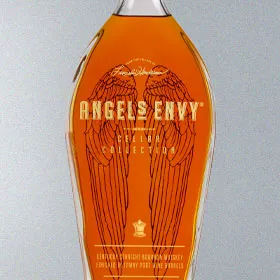
Angel's Envy Bourbon Finished in Tawny Port Wine Barrels (2020 Cellar Collection)