A comparative tasting of whiskies, ranked by their expert scores, led to a lengthy examination. This particular gathering included one whisky with a 97-point score and five with 96 points. This group consists of Scotch whiskies: a blended grain and five single malts, all from Islay. Future comparisons might mix different types, like Irish, Japanese, and American whiskies, to see how high scores hold up across categories. Analyzing six whiskies thoroughly is a significant task. To compare just two side-by-side within this group yields 15 possible pairings, and choosing three results in 20 combinations. The empirical analysis will likely take a few days, with plans to sample three spirits on consecutive nights and all six on the final evening, using very small pours. COMPASS BOX HEDONISM Pale straw color, clearly without added coloring. The aroma offers papaya, grapefruit, tangerines, marzipan, a touch of tartness, and vanilla. The texture is very glycerin-rich, with oaky vanilla notes dominating the palate. A hint of white pepper appears at the end, followed by a finish of more vanilla and a woody, tannic bitterness noted previously. If "hedonism" means an abundance of vanilla, then this expression fits the description perfectly. The label itself emphasizes "RICH—VANILLA—ALLURING." This vanilla character is amplified when tasted after any of the other whiskies in this comparison. A significant portion of this spirit is aged, with long wood contact explaining the prominent vanilla. This Compass Box expression is available for approximately $120. I would not purchase it again. Score: 2.5 (unchanged). 43% ABV. Non chill filtered. No added coloring. Series MMXVI-C. BOWMORE 18-YEAR This spirit has a clear russet mahogany hue. The nose features sherry influence with notes of dates, rugelach, brown sugar, and cocoa, layered over typical Islay elements of peat, smoke, iodine, salt, and seaweed. These sweet and savory notes carry through to the palate, with well-balanced alcohol despite the 43% ABV. The medium-length finish echoes the same sweet and savory characteristics. Bowmore 18 stands against other sherry-finished Islay scotches. However, it falls short of Lagavulin Distiller’s Edition in both sweetness and peat. While Ardbeg Uigeadail lacks an age statement, it offers significantly more power and complexity, providing a richer experience than the Bowmore 18. For those who prefer gentler spirits over cask strength, the Laphroaig 15-year 200th Anniversary Edition exemplifies elegance and refinement, whereas the Bowmore 18, while similarly gentle, lacks depth. It's a valid point that the Laphroaig 15 is a special release, but given both are rated 96 points, it raises questions. I would drink the Bowmore 18 again, but given numerous other options in my collection, I rarely find myself choosing it. It's a pleasant whisky, but not outstanding, especially considering its $150 price point. It's nice to have had it for evaluation, but I would not buy it again. Score: 3.5 (up from 3.0). 43% ABV. 18-year age statement. Chill-filtered. Coloring added. LAPHROAIG 10-YEAR This whisky presents a clear, unaltered straw color. The aroma is a complex mix of peat smoke, kelp, iodine, Band Aid, bacon fat, sage, fresh figs, white pepper, apple, speck, and orange marmalade. The palate offers fig and honey sweetness, reminiscent of a seasoned cast-iron griddle. The alcohol is mild considering the flavor intensity; a higher proof would be beneficial, as seen in the Cask Strength version. The finish is long with light fruity notes, peat smoke, and ash. Laphroaig 10 is an iconic Islay whisky, widely available for about $50. While its "burning hospital" profile can be divisive, it offers remarkable complexity and excellent value. I would absolutely buy it again. Score: 4.5 (up from 4.25). 43% ABV. 10-year age statement. Coloring added. LAPHROAIG 15-YEAR 200TH ANNIVERSARY Bright amber in color. The nose reveals cocoa powder, honey, gardenia, apple crumble, gentle peat, scones with jam, iodine, seaweed, and a hint of damp cardboard and smoke. The palate is light, with honeyed sweetness from the nose, followed by white pepper, salt, abundant ash, and lingering smoked meat on the finish. This expression is sophisticated, graceful, and complex. Due to its limited release, prices online range significantly. I would buy it again at the original price I paid, which was just over $100. I'm fortunate to own a bottle. Score: 4.5 (unchanged). 43% ABV. 15-year age statement. Coloring added. LAGAVULIN DISTILLER’S EDITION A deep orange amber color, darker than the Laphroaig 15. The nose presents notes of dates, raisins, prunes, banana, Frangelico, milk chocolate, and vanilla, overlaid on the characteristic Lagavulin kelp and iodine, with a subtle hint of Sharpie marker. The palate begins with brown sugar syrup, then reveals classic Lagavulin notes of kelp, iodine, and smoke. White pepper, brief brown sugar, and lingering smoke mark the finish. This spirit transitions from sweet to peaty from nose to finish. It offers a more refined and elegant integration of Islay malts and sherry casks compared to Bowmore 18 and Ardbeg Uigeadail. Lagavulin Distiller’s Edition is available for around $110. I would buy it again. Score: 4.25 (down from 4.5). 43% ABV. 16-year age statement. Batch lgv. 4/507. Coloring added. TALISKER 10-YEAR Clear burnt orange amber color. It exhibits cotton-candy-like sweetness, Grape Kool-Aid notes, powdered cocoa, apple pie with a hint of smoke, smoky peat, and BBQ sauce. The mouthfeel is oily and more viscous than the Laphroaig 15 and Lagavulin DE. The palate features honey and concentrated pear extract. The finish includes white pepper, honeyed biscuits, brown-sugared oatmeal, and smoky peat. Talisker 10 has consistently been a favorite Scotch whisky, and this tasting reinforces that. It's more robust and youthful than the others tasted, yet remarkably complex. It can be purchased for about $65. I would definitely buy it again; it's an incredible value. Score: 4.25 (up from 4.0). 45.8% ABV. 10-year age statement. Coloring added. E150a RANT I am becoming more aware of E150a, the caramel coloring often added to whisky for visual enhancement. There is no justifiable reason for a premium whisky with an age statement to include artificial coloring. As previously noted regarding Bowmore 18, the addition of coloring is deceptive. These are not budget spirits; they target whisky enthusiasts. The tradition and regulations of Scotch whisky emphasize purity, allowing only cereal grains, water, and yeast, with maturation in oak casks. No additional flavoring or sweetening is permitted. The inclusion of coloring raises questions about what is being concealed. Natural darkness from cask maturation should be evident, not artificially created. Germany mandates full ingredient disclosure, including the presence of E150a. Websites like Scoma.de allow users to check if coloring has been added, often indicated as "Ja, Zuckerkulör E150a" (Yes) or "Nein" (No). Serious whisky consumers desire authenticity. Springbank whiskies, known for their natural color, are not rejected by enthusiasts. Similarly, Compass Box offers premium whiskies without added coloring. The practice by Bowmore and Laphroaig of adding color, especially in darker expressions like Bowmore 18, seems disingenuous. From an economic standpoint, it's an unnecessary expense. It's baffling why these distillers obscure the true nature of their products. If any reader has insights, please share in the comments. CONCLUSION Ratings are subjective to an extent; quality or beauty is in the eye of the beholder. While no scoring system is flawless, improvements are possible. The community score, while more granular when averaged, is not aligned with the official scores. The methodology behind these ratings also needs clarification. Many 0-100 scales tend to be inflated, typically ranging from 60 to 100, whereas users employ the full range of the 0-5 scale. Furthermore, the criteria for rankings, whether focusing on nose, palate, finish, or value, needs consistent application to facilitate better comparisons. Imposing some structure would be beneficial, allowing for more standardized evaluations. In this tasting, Compass Box Hedonism and Bowmore 18 stand out. The Compass Box is admittedly one-dimensional, and this is not justifiable for a 96-point rating, especially given its high price. Its transparency regarding the blend and lack of artificial coloring are commendable but do not alter its drinking profile. Bowmore 18's use of artificial coloring is more concerning. There are superior and more affordable alternatives, and it lacks the "must-have" quality for a 96-point whisky priced at $150. The remaining whiskies excel for distinct reasons. Laphroaig 10 offers exceptional value with its complex "burning hospital meets beehive" character at $50. Laphroaig 15 200th Anniversary Edition demonstrates sophistication and grace, enhanced by its 15-year age statement. Lagavulin Distiller’s Edition achieves a better sweet/peat balance than Bowmore 18, with a refinement surpassing other similar offerings. Talisker 10 also represents outstanding value, providing a youthful, powerful spirit with both sweet and peaty notes that engage the senses, offering intellectual and sensory pleasure. All spirits were tasted neat in a Glencairn glass. (Note: This review is presented for each whisky tasted to provide context and comparison, in the same order as listed at the beginning.)
Laphroaig 15 Year 200th Anniversary
Whiskey Scotch Islay 15 Years 43% ABV
Tried it?
How was this pour?
Score this bottleRating a bottle takes an account, so your scores follow you and count towards the number everyone else reads.
About this bottle
The Laphroaig 15 Year Old expression, first developed 30 years ago, features barrels chosen for their smooth qualities. This limited edition commemorates the Islay distillery's bicentennial, with the whisky produced using the original methods and aged solely in ex-bourbon casks selected by Master Distiller John Campbell.
How it tastes
Measured across 14 flavor axes. Tap a note to find other bottles that lead with it.
Reviews
Showing the most detailed of 48 parsed reviews.
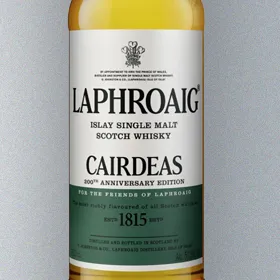
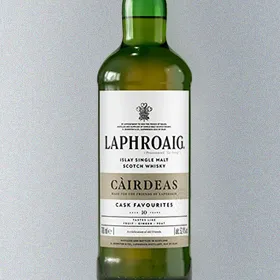
LAPHROAIG SHOWDOWN LAPHROAIG 10-YEAR LAPHROAIG CASK STRENGTH BATCH 013 LAPHROAIG CÀIDERAS 2019 TRIPLE WOOD CASK STRENGTH LAPHROAIG 15-YEAR 200TH ANNIVERSARY I tasted these over three days. Day one featured the 10-year and the Cask Strength; day two had the Càideras and the 15-year; and day three involved all four together. Preliminary notes were taken on the first two days. On day three, I changed the order from refined to more robust—which coincidentally matched descending age and ascending ABV. Regardless, on the third day, I initially sampled them in that sequence, but then randomly revisited them all. LAPHROAIG 15-YEAR 200TH ANNIVERSARY A vibrant amber hue (Pantone 123). The aroma is more sophisticated than the lively Càirdeas: notes of orange zest, porridge, cured pork, grilled asparagus, peach, and baked apples. Later, cantaloupe reappeared. The mouthfeel is not very dense, despite the 15-year age and wood influence. The palate offers sweetness with pear compote, vanilla, a hint of butterscotch, bacon, and honey. A trace of white pepper on the finish, alongside honey and dry leather notes. The 15-year shows a subdued Islay character; its qualities are much less showy than the other three. However, it's not inactive. Imagine a bell curve: somewhat subtle on the nose (yet still very intricate), more pronounced on the palate, and then finishing with elegance. Envision a cozy cabin or a wood-paneled study, a fireplace roaring, cold autumn mist outside (in Scotland or elsewhere), with Mendelssohn’s Hebrides overture playing softly. This whisky, served neat, with the bottle within reach for another pour. It inspires thoughtfulness, contemplation, and refinement. A quick online check indicates this expression can be found for $500-$600 (it was a limited release). I believe I paid about $100 some years ago, and I’m pleased with that purchase. Would I acquire it again? No. I am very happy to have bought it at a much lower price, though. It’s exceptional, and I cherish being able to experience it (a quarter bottle remains). 43% ABV. 15-year age statement. LAPHROAIG 10-YEAR A more subdued amber color (Pantone 142). Aromas include kelp, saltiness, iodine, a damp basement, and indeed, burning peat. A terracotta pot (strangely reminiscent of notes in some sangioveses), but this pot has obviously been soaked in seawater. A tire shop. Burning resin. Faint fruity hints are present: apple juice, overripe banana, and cantaloupe. Peanut brittle (a new observation). On the palate, some of that melon sweetness returns, continuing to the finish before being coated in ash. Laphroaig is a classic Islay whisky and is available for around $50. Would I purchase it again? Yes. 43% ABV. 10-year age statement. LAPHROAIG CASK STRENGTH BATCH 013 A slightly deeper amber than the 10-Year (Pantone 143). How much space do we have for the list of descriptions? Band-aid. Engine Oil. Engine sludge. Sea-Breeze (the cosmetic astringent) and the actual sea breeze (wind off the ocean). Propylene glycol (also known as antifreeze). Nori. Wakame (seaweed). Betadyne. Funk. Malted milk balls. Cocoa powder (especially right after the 10-Year). The alcohol is not noticeable on the nose. The palate is oily and coats the mouth, with intense honey and candied ginger. Then the cask-strength alcohol emerges, but is balanced by the other elements. A long finish: ash-covered smoky butterscotch. The Cask Strength is extraordinary. It possesses not only vast complexity in range but also remarkable depth. The bottle I have is the only LCS I have ever encountered. When I purchased it, it was the only one I had seen in person. The Cask Strength can be found online for under $90. At that price, it might be the best value in the entire whisky world. Would I buy this again? Yes. The finest nectar of Islay. 57.9% ABV. 10-year age statement. Batch 013. Bottled January 2021. LAPHROAIG CÀIRDEAS 2019 TRIPLE WOOD CASK STRENGTH A deep orange amber (Pantone 144). Peat smoke, ash, iodine, zesty barbecue sauce, damp cardboard, tomato leaf, slightly overcooked pancakes, star fruit, a concrete block, honeyed orange, a touch of caramel, and vanilla. On the palate: a light viscosity and sweetness, with the 59.5% ABV making a welcome impact. Some honeyed sweetness on the finish, followed by white pepper, band-aid, and iodine. Every Laphroaig expression is rich in complexity. Its Islay terroir is far more apparent than any Bordeaux or Burgundy; its origin is unmistakable. The Càirdeas adds another dimension with its varied cask finishes: bourbon, quarter, European oak, and Oloroso sherry. The quarter casks (the duration the spirit spends in them is unknown to me) theoretically increase wood exposure, somewhat compensating for the lack of an age statement. I could smell this all night (and would have to drink it too). It’s that impressive. The various releases are typically priced at $80-$90. Would I purchase it again? Yes. My previous rating was 4.0 (on 8/12/22). It surpasses that. 59.5% ABV. NAS. Non-chill filtered. These individual bottlings showcase Laphroaig's signature style, yet are distinctly unique. Each is a complex, stimulating whisky. What most surprised me during this Showdown was the fruitiness and mild sweetness I detected in each, which was slightly more than I remembered. Laphroaig's descriptions go beyond merely "burning hospital." Laphroaig's special releases, like the Càirdeas, are more traditional and reserved compared to Ardbeg, for instance, which is more adventurous with its unconventional offerings. I appreciate their more classic approach. While Laphroaig is not an everyday drink for me, I always like to keep a few of their bottles in my collection. N.B.: All spirits were tasted neat in a Glencairn glass.
ISLAY SHOWDOWN 2: HEAVYWEIGHT DIVISION Laphroaig 15 200th Anniversary Edition vs Lagavulin 16 vs Lagavulin Distiller’s Edition In a previous note, “NEW AND OLD ISLAY SHOWDOWN,” I planned to compare two favorites: Laphroaig 10 and Lagavulin 16. I then thought the comparison wasn't fair due to the age difference, so I swapped the Lag16 for Lagavulin 8. So today, I'm bringing out some more serious contenders—all very close in age. Laphroaig 15 200th Anniversary Edition was a limited bottling (72,000 released) launched on the 200th anniversary of Laphroaig’s founding in 1815 (Laphroaig previously offered a 15-year-old that was discontinued). Lagavulin 16 needs no introduction. And the Lagavulin Distiller’s edition is Lag16 “double matured” and finished in PX sherry casks; this specific bottle is batch 4/507, distilled 2002, bottled 2018. Each is 43% ABV. Lagavulin 16 is, of course, a well-known whisky, and there’s nothing new that I’ll provide here. This is true to a lesser extent with the Distiller’s Edition. The Laphroaig 15 200th Anniversary Edition is a very limited bottling, and I hope to offer some shared insight. My main goal here is to build on my previous “Islay Showdown” note, share a side-by-side comparison, and have some fun. Laphroaig 15 200th Anniversary Edition Color is lightest of the three; clear pale amber. Laphroaig’s tagline is “The most richly flavoured of all Scotch whiskies”; but this one, despite the increased age, is more subdued than its younger counterpart was last night. Fruity peach aroma and some baking spices mixed with typical Islay notes of seaweed and smoky peat, with just a hint of iodine. Peaks on the palate, where the mild 43% ABV performs better than expected. Gentle smoky peat with a touch of vanilla on the finish. In terms of intensity: mild nose, peaks midpalate, and mild finish. From a bourbon perspective, this is the Blanton’s or Elmer T. Lee of Islay whisky: smooth, refined, even subtle, but confident in what it is. And what it is it does very well. Lagavulin 16 Color is a tawny amber, deeper and somewhat darker than the Laph15. There’s little I can provide that isn’t already known about such an iconic whiskey, and if you’re reading this, you already know this. For me, the nose is not particularly expressive, but swirling brings out a host of aromas: along with Islay character, there is a citrus sweetness similar to Licor 43, and even a tanginess that could pass for Heinz 57 (!). Smoky peat on the long finish. The same 43% ABV is not as apparent as it was with the Laph15/200; this could be a result of the more mellow (though still very complex) notes of the Laph15/200, or the slightly more pronounced olfactory and flavor characteristics of Lag16. Lagavulin Distiller’s Edition Darkest of the three due to the sherry cask finishing. On the nose, the sherry casks have a dampening (but not suppressing) effect on the seaweed, iodine, and smokey peat, adding complexity with hazelnut, dates, and some brown sugar. Despite being the same 43% ABV as the others, the warmth is slightly more noticeable than its Lag16 sibling. Slightly weightier mouthfeel. Everything in balance, with more components. Just outstanding. For context: in the sherry-meets-Islay category, this is a Porsche 911 Turbo S in GT Silver Metallic, whereas Ardbeg Uigeadail is a Ferrari LaFerrari in Rosso Corsa: both incredible automobiles, but the former is more refined. If you’ve read this far, there’s really no winner here. This is not a “everyone gets a trophy” situation—except it is, in this case. Each is phenomenal in its own right. These whiskies are not duplicates of one another; there is diversity even within Islay whisky. On a value basis, Lag16 is the clear winner. It is widely available in the U.S. and can typically be found for around $90. The Distiller’s Edition has more limited production, and can be found for $110-120 in the U.S. The Laphroaig 15 200th Anniversary Edition was a limited edition, and can be found online for around $300 in the U.S. (I think I paid about a third of that a few years ago). While there are Islay-specific similarities between the three, they exhibit real differences, but no harsh aspects or deficiencies when tasted side-by-side. Each is deserving of thoughtful, unadulterated consumption. Forget water; this is 43% ABV. Drink it neat. Smell it. Swirl it. Savor it. Enjoy it. Share it. And be thankful for it. In a word: Laphroaig 15/200: Peachy. Lagavulin 16: Outdoorsy. Lagavulin Distiller’s Edition: Urbane. N.B. All spirits tasted neat in a Glencairn glass.
Next in my Laphroaig exploration is a sample of the 15-year 200th Anniversary, generously provided by a friend. The aroma is soft, velvety, and finely crafted, beginning with a blend of candied bacon, grilled pineapple, mild florals, and leather-bound books, followed by dark chocolate with light sea salt, almond croissant, and freshly lit pipe tobacco. Then come caramelized mangos, mandarin oranges, and morello cherry jam, transitioning to mild baking spices, asphalt, and polished oak, with a low ethanol burn. The taste has a medium mouthfeel, starting with creamy tropical fruits before a mild spice that quickly gives way to blonde espresso, maple-glazed crispy bacon, and leather-bound books. This is followed by dark chocolate-covered butterscotch caramels with light sea salt, toasted almonds, honeysuckle, and freshly lit pipe tobacco. It then progresses to caramelized mangos, peaches, and cherry pie filling, transitioning to mild baking spices, asphalt, and polished oak, with a low ethanol burn. The finish is medium length, starting with sweet caramelized tropical fruits that recede to the background of lightly smoked meats, pipe tobacco, mild ocean brine, asphalt, leather-bound books, and polished oak. This is an absolutely outstanding dram; the extra years in the casks have truly transformed those intense peat, slightly sour citrus, and diesel notes of younger Laphroaig into soft, sweet smoked meats, alongside tropical fruits, florals, and well-aged oak. It drinks much richer than its 43% ABV would suggest. At under $100 when released, this was an incredible value for a dram Laphroaig offered to celebrate their 200th anniversary for their fans, and it's certainly one I won't soon forget. Thanks again to a friend for sharing this; I doubt I would have tried it otherwise and am surprised that the lowest ABV in the series so far has now become the leader. Ratings for the series so far: 10-year cask strength batch 11- 3.75 10-year sherry oak finish- 4.0 Lore- 4.0 2019 Caidreas Triple Wood- 3.75 2020 Caidreas Port and Wine - 3.75 2021 Caidreas PX - 4.0 15-year 200 Anniversary- 4.5
A pleasant Saturday spent constructing a woodpile outdoors. Afterward, a fine meal was followed by relaxation, enjoying a pour while streaming the Grand Ol' Opry live with Luke Combs and Craig Morgan. The Laphroaig, acquired previously and shared, had yet to be personally sampled. Tonight, a desire for something robust and smoky arose, and this seemed a fitting choice. The liquid presents as a pale, nearly clear yellow. Imagine a beach bonfire with a sweet dram in hand. The initial aroma is quite inviting, gradually revealing tropical notes of pineapple and apricot. With time, a pleasant earthiness emerges, reminiscent of cucumber and mint. This blends with the brine and peat, creating an alluring complexity. Hints of toffee and vanilla are also present. A gentle entry introduces a subtle smokiness. The mouthfeel is smooth and silky. Beyond the mild peat and softness, a wave of sugary sweetness emerges and lingers. The flavors intertwine elegantly: tobacco, sea salt, vanilla, black pepper, caramel, apples, and dark chocolate. A long, subtle finish offers sweetened tobacco, black pepper, lemon zest, and oak tannins. At a respectable 43%, this spirit delivers from the start with its aromas, flavors, and finish. The balance between the scents and tastes is expertly crafted, with no single element of peat, spice, or sweetness overpowering the others. It's an effortlessly drinkable yet complex whisky. Among the Laphroaigs I've sampled (though I've yet to try Lore), this stands out. A worthwhile purchase at $74. [95/100][Tasted: 4/25/20]
In the past, the original 15-year-old Laohroaig held the top spot in their offerings. While the 10 was the basic version, the 15 was the most sought-after. Even Prince Charles favored it, leading to Laphroaig receiving a Royal Warrant, signifying its endorsement by the royal family as the sole whisky for the palace. That initial 15-year-old is long gone, likely fetching hundreds at auction. This remained the case until a few years ago when this new bottling was produced. It has been some time since my last Laphroaig. The medicinal, phenolic smell is unmistakable, followed by the typical salty, seaweed flavor with a touch of iodine. This might sound unappealing to those unfamiliar, but for those who know it, this description perfectly captures its excellent quality. I had the opportunity to try this thanks to a friend. I sampled it a few years ago upon its release, but I'm grateful for another taste, especially since this specific type is now difficult to locate. This 15-year-old expression is less intense than the 10; its strength is nearly subdued. However, this does not make it dull. Far from it. It has an impressively full, oily texture with notes of citrus, brine, and anchovies. There's a significant amount of sea salt and a hint of tobacco leaf. Do not anticipate the aggressive power of the 10. This is gentler, more sophisticated. I'm uncertain if it's now out of production or back in their main selection—regardless, if you encounter this, it's an obvious purchase, assuming the cost is reasonable.
42 more reviews were collected for this bottle. The longest ones are shown first.
Tastes like this
Closest flavor profiles across the whole catalog.