
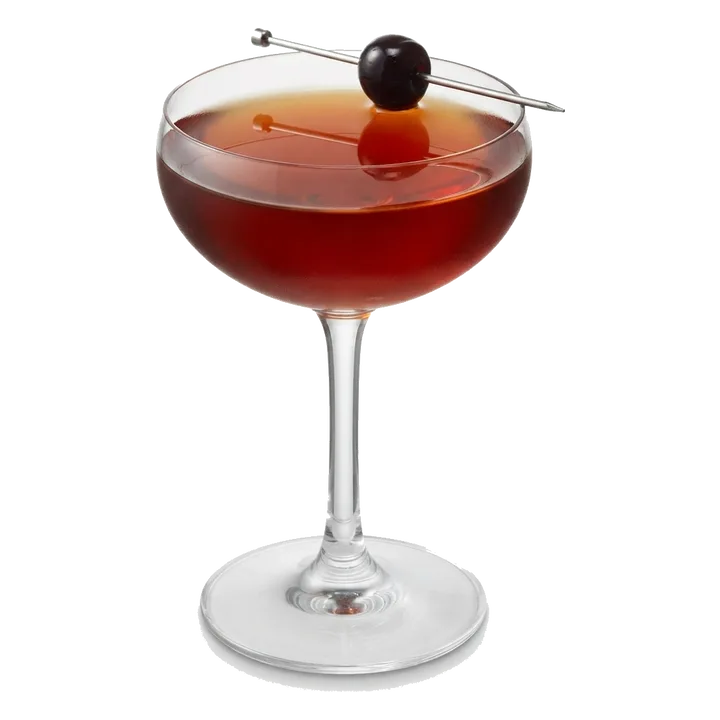
Reverse Manhattan
4.0 58 ratings
Ingredients
How to make
Serve in a coupe glass
Prepare
- 1 Select and pre-chill a COUPE GLASS.
- 2 Prepare garnish of Luxardo Maraschino Cherry.
Method
- 3 STIR all ingredients with ice.
- 4 FINE STRAIN into chilled glass.
Garnish
- 5 Garnish with maraschino cherry.
Made it?
How did it pour?
Rate this drinkWith an account you can score a drink once you have poured it and keep a note on how you made it. Your score and your note are yours alone; share your ingredient list if you want to, and other members see how you pour it.
Flavour profile
50.0% alc./vol. · 1.4 standard drinks · 159 calories
History
This Reverse Sweet Manhattan suits an aperitivo, unlike the classic Sweet Manhattan, which suits late-night drinking.
The exact origin of the Manhattan cocktail is not definitively known, but it is widely believed to have originated in the 1870s. One popular story places its creation at the Manhattan Club in New York City in 1874. The club's owner, Joe Sheck, is said to have hosted a banquet for presidential candidate Samuel J. Tilden. Jennie Jerome, the mother of Winston Churchill, is often credited with creating the drink for this event. However, no contemporary accounts from 1874 mention her or the cocktail. A bartender named Black, working at the Manhattan Club, is also sometimes cited as the inventor. He supposedly created the drink for a group of backroom politicians. Another theory suggests the drink evolved from a pre-existing rye whiskey cocktail served at a place called the "Manhattan" on Houston Street. Regardless of the precise circumstances, the Manhattan quickly gained popularity and became a staple in American bars by the late 19th century. Its classic recipe, typically featuring rye whiskey, sweet vermouth, and Angostura bitters, remains largely unchanged. Many variations exist, but the core elements are consistent with its early iterations. Research has not uncovered earlier references to the drink before the 1870s, suggesting this period as its likely genesis.